Lens implantation corrects vision by placing a lens behind the iris
while keeping the natural crystalline lens.
The question is not which lens is better,
but which lens fits the structure of your eye.
After checking anterior chamber depth and angle, intraocular space, power, astigmatism and night pupil,
our doctors decide the lens type and size.
A lens is implanted directly inside the eye without cutting the cornea
to correct vision.
The existing natural lens is not removed
and is preserved.

Designed to be thin like a soft contact lens
and flexible.
With a broad power range covering myopia, astigmatism and hyperopia,
the lens can be used for various vision correction needs.

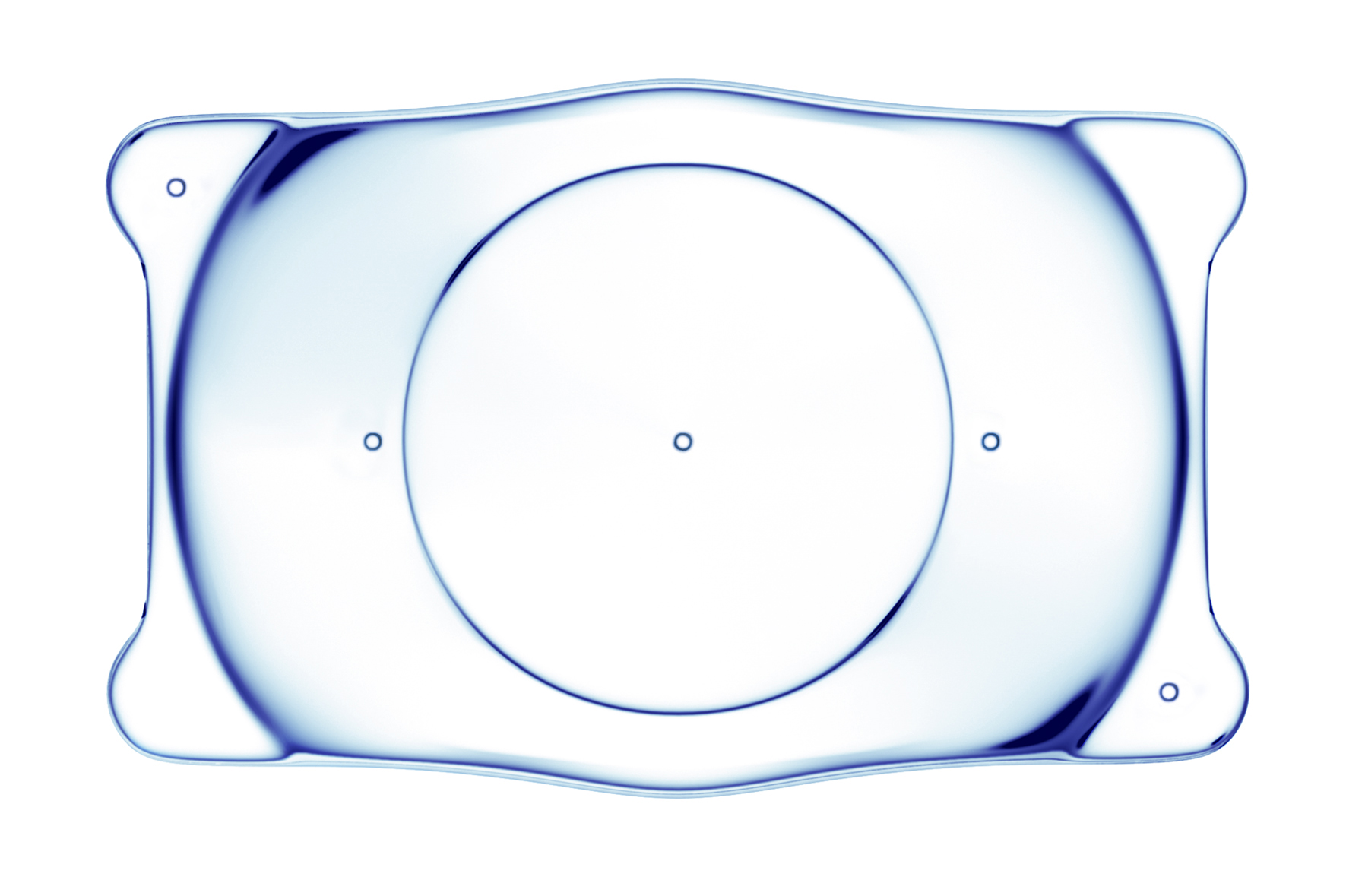
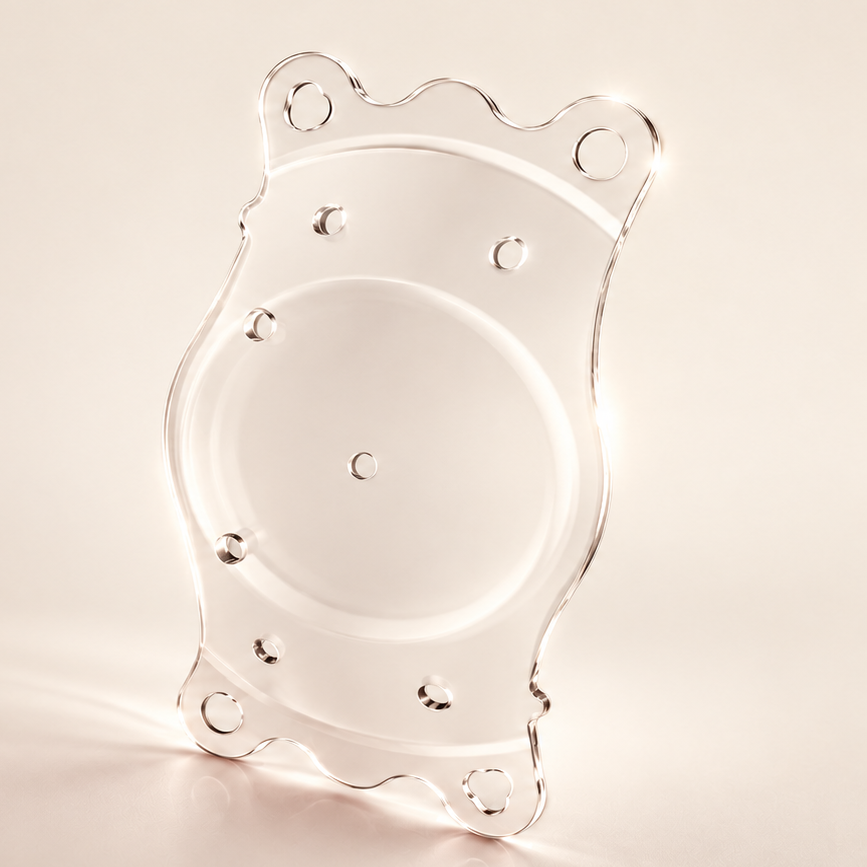
ECHO IPCL is made of hydrophilic acrylic material
and is a thin, flexible posterior chamber phakic lens.
Its soft, flexible lens structure
is designed for implantation within the space inside the eye,
A central-hole design and a range of lens options allow vision correction to be considered according to each person’s eye condition.
* Schematic for explanation only; not to scale.
The ECHO IPCL is a vision correction lens implanted between the iris and the natural lens
without removing the natural crystalline lens.
Its position and purpose differ from a contact lens worn on the cornea and from the intraocular lens that replaces the natural lens in cataract surgery.
Before choosing a lens, we read the eye
Lens implantation needs more than an eye chart test.
We check refraction, the structure where the lens will sit,
eye pressure, endothelium and other eye conditions to judge suitability.
Precise Space MeasurementThe structure where the lens sits and the anterior chamber depth are measured with precision instruments.
Cross-Checked PowerThe power to correct is cross-checked by instruments and by the doctor directly.
Doctor ConsultationBased on your results, we discuss lens suitability and other vision correction options together.
Post-Op Position CheckAfter surgery, lens position, the gap to the natural lens and eye pressure are checked regularly.
Care does not end with choosing a lens.
Eligibility, lens preparation time, visit schedule and return to daily life
vary by individual condition and treatment plan.
Refraction, intraocular structure,
eye pressure and endothelium
Suitability judged from results;
lens type, power and size planned
Lens order and preparation time,
surgery date guidance
Through a small corneal incision,
the lens is placed behind the iris
Vision, lens position,
eye pressure and early condition
Lens position, gap to the natural lens,
endothelium checked regularly
The lens design features do not promise a result;
they are factors we check together when examining whether it suits your eye.
Holes Designed for Aqueous FlowHoles in the center and periphery let the aqueous humor, the fluid inside the eye, move through.The number of holes does not guarantee the surgical result or prevention of side effects.
Size Chosen with PowerRefraction results and intraocular structure are reviewed together to choose from several sizes; after implantation the gap to the natural lens (vault) is checked.
Toric Model for AstigmatismFor astigmatism, the axis is checked along with the power. We review whether the toric model applies based on your exam, and check position and residual astigmatism after surgery.The applicable astigmatism range and order schedule are advised after the exam and confirmation of domestic supply specifications.
Hydrophilic Acrylic MaterialThe lens is described as a hydrophilic acrylic material.Material information follows the labeling of the specific model.
A thin cornea alone does not make lens implantation possible.
Surgery may be limited when the space inside the eye is insufficient, the endothelium is not adequate,
eye pressure is high, or there are conditions such as glaucoma or recurrent inflammation.
Post-operative care and precautions are explained in detail at your consultation.
3F & 4F, 597 Gangnam-daero, Seocho-gu, Seoul
Transit | Sinsa Station (Exit 4), 1-minute walk
Parking | Free Parking Available / Valet Service (KRW 2,000 fee applies)
Consultation & Inquiries
02.3416.1001
Office Hours
*Closed on Thursdays, Sundays, and Public Holidays

· Former Professor, Department of
Ophthalmology, Hanyang University
· Former Head, Department of
Ophthalmology, Hanyang University Hospital
· Clinical Fellow in Retina,
Harvard Medical School / Mass Eye and Ear, USA
· Post-doctoral Fellowship,
Schepens Eye Research Institute, USA
· Research Fellow in Retina,
Osaka City University, Japan
· Excellence Award for Training Hospital,
Korean Ophthalmological Society
· Reviewer, Experimental Eye Research
(International Medical Journal)
· Reviewer, Journal of Cataract and Refractive
Surgery (International Medical Journal)
· Appointed Medical Advisor,
NAVER Knowledge iN (Health & Medicine)
· Selected as one of the
"Top 100 Doctors in Korea"
· Former Director, Jecheon Public Health Center
(Awarded Plaque of Merit for Free
Vision Restoration Surgery
· Full Member,
Korean Ophthalmological Society (KOS)
· Full Member, American
Academy of Ophthalmology (AAO)
· Full Member, American Society of
Cataract and Refractive Surgery (ASCRS)
· Full Member, European Society of
Cataract and Refractive Surgery (ESCRS)
· Former Professor, Department of
Ophthalmology, Hanyang University Hospital
· M.S. in Medicine, Hanyang University
Graduate School of Medicine
· Ophthalmology Residency,
Hanyang University Hospita
· Cornea Specialist, Department of Ophthalmology,
Samsung Medical Center (SMC)
· Clinical Instructor, Vision Correction Center
Samsung Medical Center (SMC)
· Research Award, 98th Annual Meeting of
the Korean Ophthalmological Society
· Grand Prize in Presbyopia,
Korea Health Industry Awards (2016)
· Grand Prize in Consumer Satisfaction,
Selected by Consumers (2019)
· Grand Prize in Medical Service Brand
(Presbyopia & Cataract Surgery Category)
· SMC Partner (Affiliated Physician),
Samsung Medical Center
· Full Member, Korean
Ophthalmological Society (KOS)
· Full Member, Korean
External Eye Disease Society (KEEDS)
· Full Member, Korean Society of
Cataract and Refractive Surgery (KSCRS)
· Full Member, Korean Contact Lens
Study Society (KCLSS)
· Full Member, Association for Research
in Vision and Ophthalmology (ARVO)
· M.S. in Medicine, Dankook University
Graduate School of Medicine
· Ophthalmology Residency,
Dankook University Hospital
· Former Vice Director,
Gangnam Eye One Clinic
· Former Vice Director, Kwanghye Eye Clinic
· Full Member, Korean
Ophthalmological Society (KOS)
· Full Member, Korean
Contact Lens Study Society (KCLSS)






![[종료된 이벤트] 추석맞이 특가 프로모션](https://agjeye.com/en/data/event/팝업_26_추석2.jpg)

![[종료된 이벤트] 진짜 여름, COOL SUMMER EVENT](https://agjeye.com/en/data/event/26_여름2.jpg)

![[종료된 이벤트] 얼리버드 여름 준비 6월 프로모션](https://agjeye.com/en/data/event/팝업_6월특가.jpg)
![[종료된 이벤트] 5월 가정의달 이벤트](https://agjeye.com/en/data/event/팝업_가정의달.jpg)
![[종료된 이벤트] 10주년 기념 특별 프로모션](https://agjeye.com/en/data/event/KakaoTalk_20260428_144533023_01.jpg)
![[종료된 이벤트] 의사 김준현TV 쇼츠 1000만뷰 EVENT](https://agjeye.com/en/data/event/KakaoTalk_20260428_144533023.jpg)
 NAVER Map
 KAKAO Map
 Tmap
Tmap


