Lens implantation corrects vision by placing a lens behind the iris
while keeping the natural crystalline lens.
The question is not which lens is better,
but which lens fits the structure of your eye.
After checking anterior chamber depth and angle, intraocular space, power, astigmatism and night pupil,
our doctors decide the lens type and size.
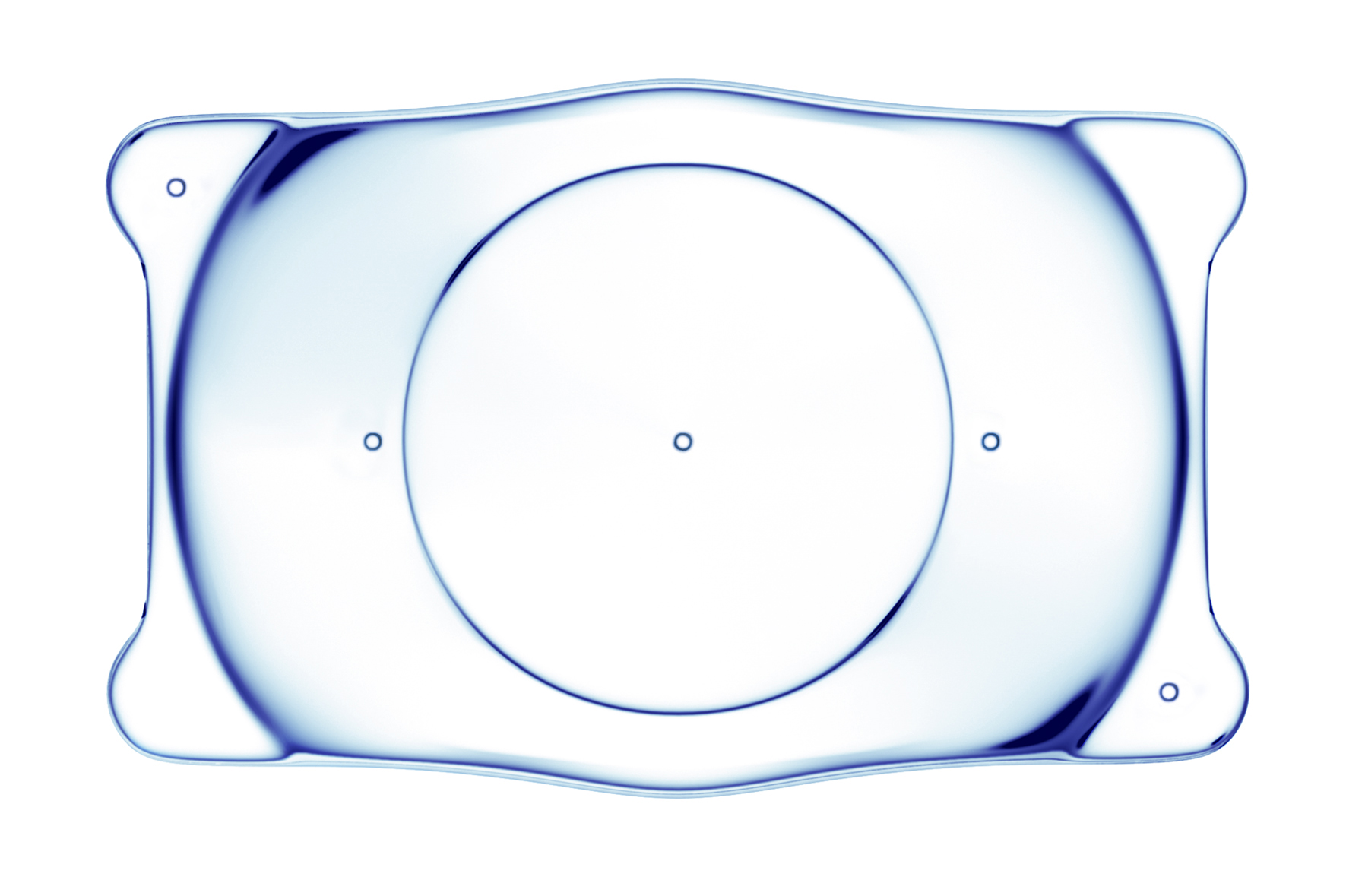
A posterior chamber phakic lens developed by
Korean ophthalmic company Koryo Eyetech.

Implanted behind the iris
without removing the natural crystalline lens.
‘Phakic intraocular lens (phakic IOL)’
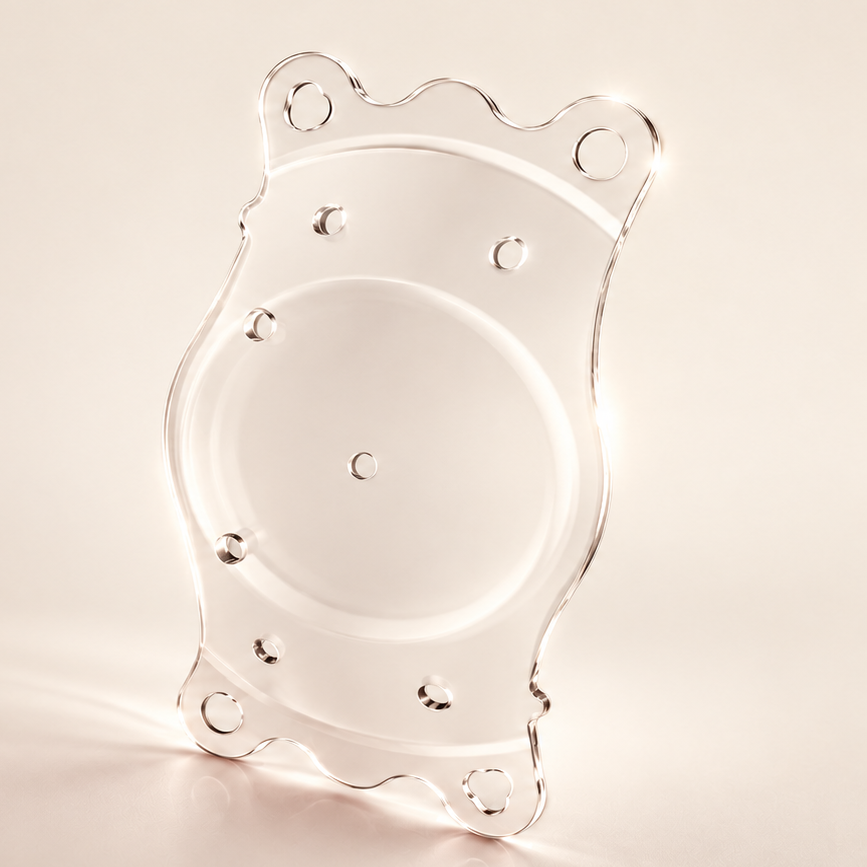
Multiple size options, a 6.2 mm optic zone (per published data),
and a four-point haptic design.

KPL is a posterior chamber phakic lens developed with Korean technology,
featuring a precise, customized design that takes each person’s eye structure into account.
Biocompatible hydrophilic acrylic material is used,
a range of lens sizes and a wide 6.2 mm optical zone are incorporated to support
lens selection tailored to each person’s eye structure and vision correction that considers the quality of night vision.

The same lens does not give
the same result in every eye.
The space inside the eye, anterior chamber depth and angle, the position of the natural lens,
night pupil size, corneal endothelium and retina must all be examined together.
We look at the structure of your eye before the product name,
and compare KPL, EVO+ ICL and
other vision correction options based on your results.
Eligibility and lens choice are determined by our doctors after a precision exam.
Anesthesia, surgery time and recovery
may vary by individual condition and the doctor’s judgment.

A small incision is made
at the edge of the cornea

The folded lens is inserted
into the eye through the incision

Placed behind the iris, then
centering, orientation and vault are checked
KPL’s design features do not guarantee a result;
they are factors we check together when choosing a lens that fits your eye.

Cornea PreservedThe lens is implanted behind the iris without cutting the corneaEligibility is decided after the exam.

Multiple Size OptionsSeveral sizes are available to account for differences in the space inside the eyeThe size is decided after the exam.

6.2 mm Optic ZoneWe compare the optic zone with your night pupil size to discuss visual qualityAdvised after a night pupil exam.

Four-Point HapticsA four-point haptic design that takes lens position and rotation into accountLens position is checked at regular follow-ups.

A posterior chamber phakic lens developed by Korean ophthalmic company Koryo Eyetech,
which the manufacturer describes as designed with the diverse eye anatomy of East Asians in mind.
The manufacturer presents it as a biocompatible material; material biocompatibility
is an important criterion for a lens that remains in the eye long-term.
Multiple sizes · 6.2 mm optic zone (published data) · four-point haptics
The toric option described in published data is also reviewed based on your exam.
Lens suitability depends on the condition of each eye,
and which procedure is appropriate is determined by our doctors from precision exam results.
Depending on anterior chamber depth and angle, corneal endothelium, cataract, glaucoma, eye pressure, retina and refractive stability,
surgery may be difficult or further evaluation may be needed.
Actual indications, contraindications and correction range follow the latest approval and the doctor’s judgment.
3F & 4F, 597 Gangnam-daero, Seocho-gu, Seoul
Transit | Sinsa Station (Exit 4), 1-minute walk
Parking | Free Parking Available / Valet Service (KRW 2,000 fee applies)
Consultation & Inquiries
02.3416.1001
Office Hours
*Closed on Thursdays, Sundays, and Public Holidays

· Former Professor, Department of
Ophthalmology, Hanyang University
· Former Head, Department of
Ophthalmology, Hanyang University Hospital
· Clinical Fellow in Retina,
Harvard Medical School / Mass Eye and Ear, USA
· Post-doctoral Fellowship,
Schepens Eye Research Institute, USA
· Research Fellow in Retina,
Osaka City University, Japan
· Excellence Award for Training Hospital,
Korean Ophthalmological Society
· Reviewer, Experimental Eye Research
(International Medical Journal)
· Reviewer, Journal of Cataract and Refractive
Surgery (International Medical Journal)
· Appointed Medical Advisor,
NAVER Knowledge iN (Health & Medicine)
· Selected as one of the
"Top 100 Doctors in Korea"
· Former Director, Jecheon Public Health Center
(Awarded Plaque of Merit for Free
Vision Restoration Surgery
· Full Member,
Korean Ophthalmological Society (KOS)
· Full Member, American
Academy of Ophthalmology (AAO)
· Full Member, American Society of
Cataract and Refractive Surgery (ASCRS)
· Full Member, European Society of
Cataract and Refractive Surgery (ESCRS)
· Former Professor, Department of
Ophthalmology, Hanyang University Hospital
· M.S. in Medicine, Hanyang University
Graduate School of Medicine
· Ophthalmology Residency,
Hanyang University Hospita
· Cornea Specialist, Department of Ophthalmology,
Samsung Medical Center (SMC)
· Clinical Instructor, Vision Correction Center
Samsung Medical Center (SMC)
· Research Award, 98th Annual Meeting of
the Korean Ophthalmological Society
· Grand Prize in Presbyopia,
Korea Health Industry Awards (2016)
· Grand Prize in Consumer Satisfaction,
Selected by Consumers (2019)
· Grand Prize in Medical Service Brand
(Presbyopia & Cataract Surgery Category)
· SMC Partner (Affiliated Physician),
Samsung Medical Center
· Full Member, Korean
Ophthalmological Society (KOS)
· Full Member, Korean
External Eye Disease Society (KEEDS)
· Full Member, Korean Society of
Cataract and Refractive Surgery (KSCRS)
· Full Member, Korean Contact Lens
Study Society (KCLSS)
· Full Member, Association for Research
in Vision and Ophthalmology (ARVO)
· M.S. in Medicine, Dankook University
Graduate School of Medicine
· Ophthalmology Residency,
Dankook University Hospital
· Former Vice Director,
Gangnam Eye One Clinic
· Former Vice Director, Kwanghye Eye Clinic
· Full Member, Korean
Ophthalmological Society (KOS)
· Full Member, Korean
Contact Lens Study Society (KCLSS)





![[종료된 이벤트] 추석맞이 특가 프로모션](https://agjeye.com/en/data/event/팝업_26_추석2.jpg)

![[종료된 이벤트] 진짜 여름, COOL SUMMER EVENT](https://agjeye.com/en/data/event/26_여름2.jpg)

![[종료된 이벤트] 얼리버드 여름 준비 6월 프로모션](https://agjeye.com/en/data/event/팝업_6월특가.jpg)
![[종료된 이벤트] 5월 가정의달 이벤트](https://agjeye.com/en/data/event/팝업_가정의달.jpg)
![[종료된 이벤트] 10주년 기념 특별 프로모션](https://agjeye.com/en/data/event/KakaoTalk_20260428_144533023_01.jpg)
![[종료된 이벤트] 의사 김준현TV 쇼츠 1000만뷰 EVENT](https://agjeye.com/en/data/event/KakaoTalk_20260428_144533023.jpg)
 NAVER Map
 KAKAO Map
 Tmap
Tmap


